

Kaiser Permanente Workers Strike
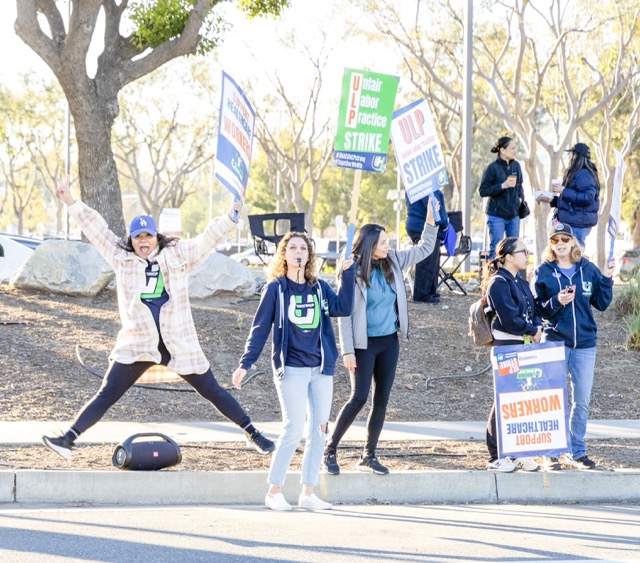
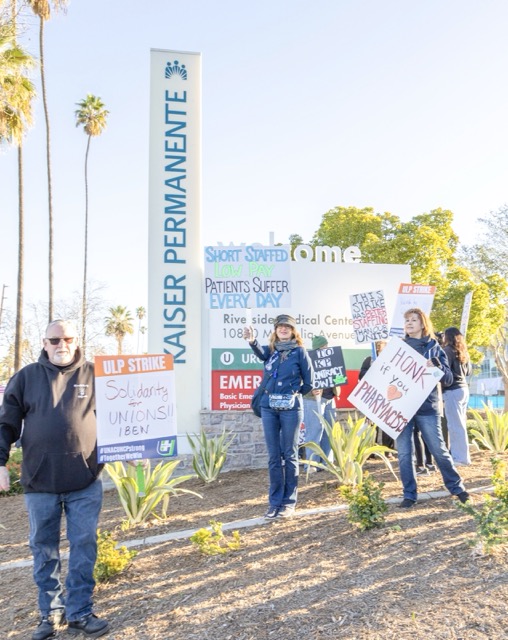
Combined Sources – In a nearly year-old contract dispute taking an increasingly bitter turn, unions representing more than 30 thousand Kaiser Permanente healthcare workers in California, Oregon, Washington, and Hawaii, including scores in Riverside County, engaged in a second round of strikes this week.
Publicly, the two sides even disagree on the primary issue, with labor saying it is patient care, while management counters that it’s all about money.
Kaiser facilities remain open, though there is a shuffling of appointments, in one of the nation’s largest not-for-profit health plans serving more than 12 million members.
The United Nurses Assns. of California/Union of Health Care Professionals, UNAC/UHCP, is an alliance of 23 unions whose members include registered nurses,
pharmacists, nurse anesthetists, nurse practitioners, midwives, physicians
assistants, rehab therapists, speech language pathologists, dietitians, and
other specialty health care professionals.
Physical Therapist Christina Perryman said that many feel that Kaiser is pushing nurses and other healthcare professionals out of the conversation when decisions are made about how to care for patients.
“We’re fighting for safe staffing for nurses and occupational therapists, [and] physical therapists because the patients are delayed in care,” Perryman explained.
“We don’t have the space or the availability,” said the Riverside Clinic President for UNA/CHCP Doug Wong. “The C word is scary for a lot of folks, and it’s hard to explain to a patient why they’re waiting. We spend our days trying to fix these things, but can’t do it if we don’t have the resources to do so.”
Registered nurse Jessica Person offers the perspective of both an employee and mother, whose children are Kaiser patients. “I’ve had my pediatrician switch five-six times within the last 4 or 5 years.”
Kaiser contends the union rebranded its public messaging following an initial five-day walkout in October, shifting its purpose to a “fight for patient safety,” as opposed to a wage dispute.
“Despite the union’s claims, this strike is about wages,” Camille Applin-Jones, senior vice president at Kaiser Permanente Southern California, said. “This open-
ended strike by UNAC/UHCP is unnecessary when such a generous offer is on the
table.”
On the point of money, workers are asking for a 25% wage increase over four years to make up for wages they say are at least 7% behind their peers.
Kaiser Permanente has countered with a 21.5% increase over four years. The company says that represented employees earn, on average, 16% more than their peers.
Following the end of picketing in October, negotiations stalled again in December. Among the reasons, the company says, in a lawsuit filed in the U.S. District Court for the Central District of California last week, was an ongoing disinformation campaign maligning the healthcare provider for its patient care.
Kaiser contends “the parties reached tentative agreements on all of the recommendations of the joint labor-management subcommittee in national bargaining, save one.”
The Kaiser suit seeks a “Judicial Determination…that plaintiffs (Kaiser) are excused or otherwise not obligated to engage in group bargaining for a national agreement.”
Kaiser said Sunday that the union had agreed to return to local bargaining, even as workers moved forward with the strike.
“We will continue to push Kaiser to stop their egregious unfair labor practices against the frontline workers who deliver the best care for their patients and billions in profit to do the right thing, and come back to the table to bargain in good faith,” the union bargaining committee said in a statement.
The company said health clinics and hospitals will remain open during the strike, with some in-person appointments shifted to virtual appointments, and some elective surgeries and procedures being rescheduled.
For More Local Riverside County News Visit www.zapinin.com